
Table of Contents
Introduction: Why Eating Too Little Does Not Lead to Weight Loss
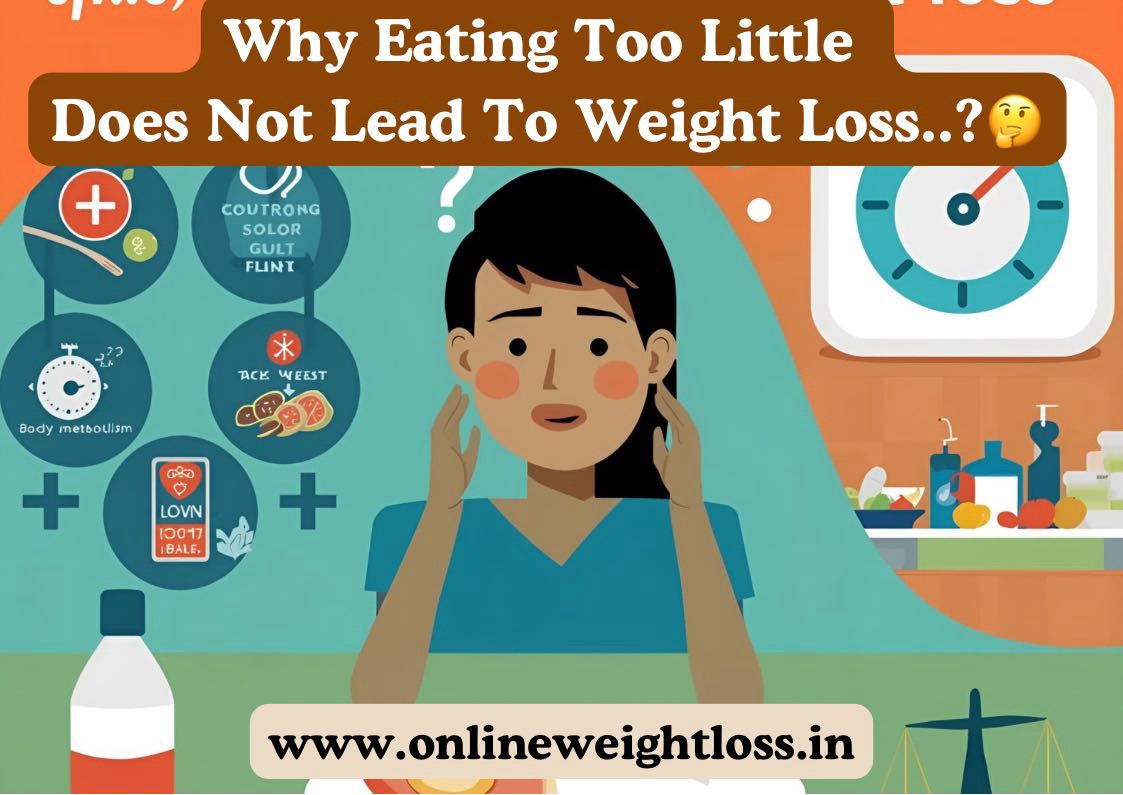
Many people wonder why eating too little does not lead to weight loss even when they are consuming far fewer calories. The truth is that when you eat less than what your body needs, it doesn’t automatically burn fat. Instead, your body slows down your metabolism and starts conserving energy — making fat loss harder.
The Common Misconception About Eating Less
Most people think that reducing food intake equals faster weight loss. Initially, eating very little might cause a small drop on the scale, but soon the body reacts. It goes into a protective mode, reducing calorie burn and prioritizing survival.
This is why eating less will not lead to losing more — it can, in fact, have the opposite effect.
The 1,200-Calorie Threshold Explained
Health experts recommend that daily calorie intake should not drop below 1,200 calories for women and 1,500 calories for men.
When your calorie consumption falls below this limit, your body perceives it as starvation. In response, your metabolism slows down drastically to conserve energy, leading to fat storage instead of fat loss. In any case, we should not reduce our minimum calorie requirement.
How Starvation Mode Slows Down Metabolism
When your body experiences prolonged calorie restriction, it enters what’s commonly known as “starvation mode.”
In this state, your basal metabolic rate (BMR) — the number of calories your body burns at rest — drops significantly.
This means even everyday activities like walking or breathing burn fewer calories.
“The more you restrict your food, the more your body resists losing weight.”
This is one of the main reasons why eating too little does not lead to weight loss — your body becomes extremely efficient at conserving energy and protecting fat stores.
Why the Body Starts Storing Fat Instead of Burning It
When you drastically cut calories, your body starts using muscle tissue for energy rather than fat.
As muscle mass decreases, your metabolism slows even further. Then, when you resume normal eating, your body quickly stores the extra calories as fat — preparing for the next “famine.”
This cycle explains why crash dieting leads to temporary weight loss and long-term weight gain.
Balanced Eating for Sustainable Weight Loss
“Sustainable weight loss comes from balance, not starvation.”
The key to losing weight effectively is not eating less, but eating smart.
Consume a moderate calorie deficit with nutrient-dense foods such as lean proteins, healthy fats and complex carbohydrates.
Balanced meals help maintain your metabolism, preserve muscle and promote consistent fat loss.
Smart Habits for Healthy Weight Management
- Eat only 3 meals a day to maintain energy, metabolism and smart calorie deficit.
- Never skip breakfast — it jumpstarts your day and calorie burn.
- Stay hydrated; dehydration slows fat metabolism.
- Prioritize sleep and stress management — both affect hormones linked to weight.
- Avoid crash diets; instead, focus on long-term balance.
Related Resources
- How Calorie Restriction Affects Metabolism
- External Link: Harvard Health – Why Starving Yourself Doesn’t Help Weight Loss
Conclusion: Real Weight Loss Comes from Nourishment, Not Starvation
Now you understand why eating too little does not lead to weight loss.
Starving yourself slows metabolism, triggers fat storage and harms your overall health. The most effective way to lose weight is through balanced nutrition, regular activity and consistency — not deprivation.
For Detailed Weight Loss Guidance, Read Our Complete Guide to Healthy Weight Loss.

3 thoughts on “Why Eating Too Little Does Not Lead to Weight Loss”
Comments are closed.