Table of Contents
Introduction
When starting a weight loss journey, one of the most common questions people ask is: how much weight loss per month is healthy? Many people expect rapid results, influenced by social media transformations and crash diet promises. However, sustainable and healthy weight loss follows a scientific approach rather than quick fixes.
Understanding how much weight loss per month is healthy is crucial because losing weight too quickly can harm your metabolism, muscle mass and overall health. On the other hand, slow and steady weight loss supports long-term success.
In this guide, we will explain the science behind safe fat loss, realistic expectations and how your body actually responds during a weight loss journey.
What Is Considered Healthy Weight Loss?
From a scientific and medical perspective, healthy weight loss is typically:
- 0.5 to 1 kg per week
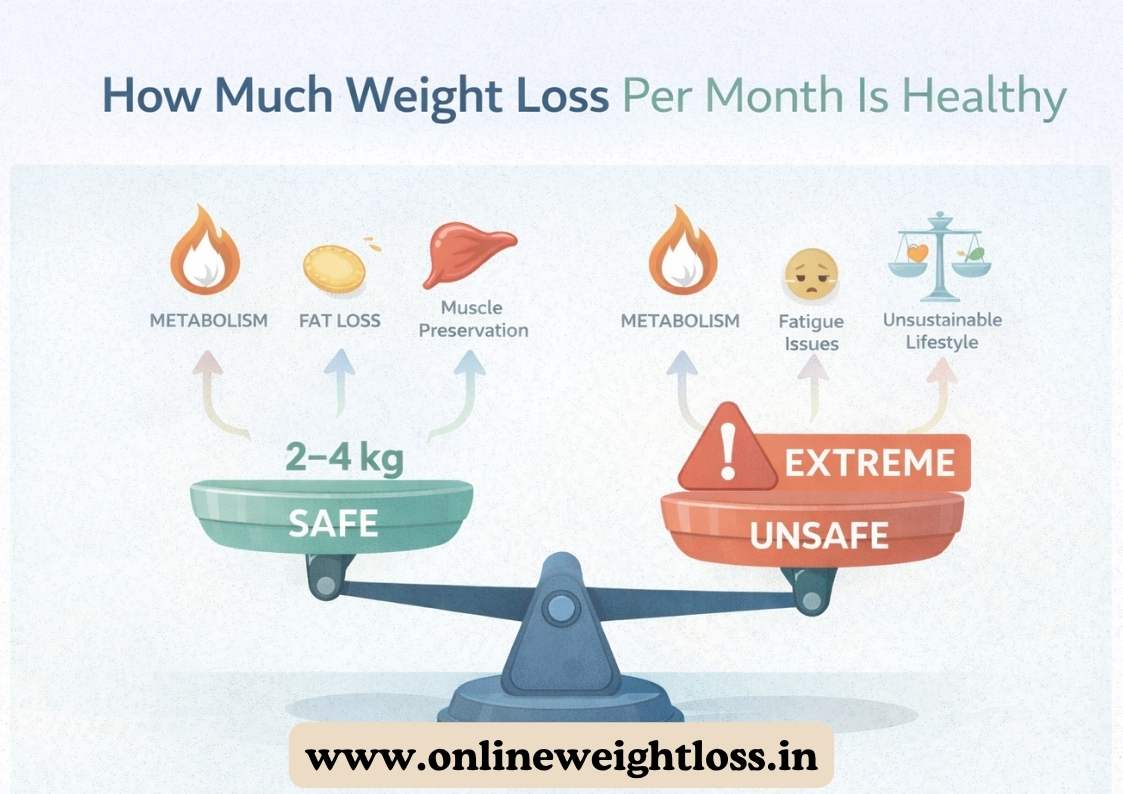
- 2 to 4 kg per month
This range is considered safe because it allows your body to lose fat while preserving muscle and maintaining metabolic function.
So, if you are searching for how much weight loss per month is healthy, the answer for most people is around 2–4 kilograms per month, depending on factors like body weight, diet and activity level.
The Science Behind Healthy Weight Loss
Weight loss is primarily driven by a calorie deficit. This means your body burns more calories than it consumes.
However, the process is influenced by:
- Metabolism
- Hormones
- Muscle mass
- Activity level
- Diet quality
When you create a moderate calorie deficit, your body gradually uses stored fat for energy. This is the most sustainable way to achieve healthy fat loss.
Understanding this mechanism helps clarify how much weight loss per month is healthy without damaging your body.
Why Rapid Weight Loss Is Not Healthy
Many diets promise 5–10 kg weight loss in a month. While this may seem attractive, it is usually not sustainable.
Problems with rapid weight loss:
- Loss of muscle mass instead of fat
- Slower metabolism
- Nutritional deficiencies
- Increased fatigue and weakness
- Higher chances of regaining weight
Extreme calorie restriction puts your body into survival mode, reducing energy expenditure and making long-term weight loss harder.
This is why understanding healthy weight loss per month is essential for avoiding these risks.
Factors That Affect Monthly Weight Loss
Not everyone loses weight at the same rate. Several factors influence how quickly you lose weight:
1. Starting Body Weight
People with higher body weight may lose weight faster initially.
2. Metabolism
A faster metabolism burns more calories at rest.
3. Diet Quality
Whole, nutrient-dense foods support fat loss better than processed foods.
4. Physical Activity
Regular exercise increases calorie burn and improves metabolism.
5. Hormonal Balance
Hormones like insulin, cortisol and thyroid hormones affect fat storage and burning.
All these factors determine how much weight loss per month is healthy for each individual.
The Role of Calorie Deficit
A safe calorie deficit is key to healthy weight loss.
- 500 calorie deficit per day → ~2 kg/month
- 750 calorie deficit per day → ~3 kg/month
- 1000 calorie deficit per day → ~4 kg/month
It is crucial to know that cutting approximately 8000 calories in total results in a 1 kg weight loss. Creating a moderate deficit ensures fat loss while maintaining muscle and energy levels.
Why Slow Weight Loss Works Better
Slow weight loss may feel less exciting, but it offers long-term benefits:
- Preserves muscle mass
- Maintains metabolism
- Improves consistency
- Reduces rebound weight gain
- Supports sustainable habits
When you follow a steady approach, your body adapts in a healthy way. This is the real answer to how much weight loss per month is healthy.
Practical Strategy for Healthy Monthly Weight Loss
To achieve sustainable fat loss, focus on these key habits:
1. Balanced Diet
- Eat protein-rich foods (dal, paneer, eggs, curd)
- Include vegetables and fiber
- Limit sugar and processed food
2. Regular Physical Activity
- Walk daily
- Include strength training
- Stay active throughout the day
3. Proper Sleep
- Aim for 7–8 hours
- Maintain a consistent sleep schedule
4. Stress Management
- Practice meditation or breathing exercises
- Avoid chronic stress
5. Stay Hydrated
- Drink 1 liter of water for each 20kg of weight daily
These habits support metabolism and hormone balance, helping you achieve a healthy rate of weight loss.
Common Myths About Monthly Weight Loss
Myth 1: Faster weight loss is better
Reality: Slow and steady weight loss is healthier and more sustainable.
Myth 2: Skipping meals helps lose weight faster
Reality: It slows metabolism and increases overeating later.
Myth 3: Exercise alone is enough
Reality: Diet and lifestyle play a major role.
Understanding these myths helps reinforce how much weight loss per month is healthy in a realistic way.
FAQs: How Much Weight Loss Per Month Is Healthy
1. Is losing 5 kg per month healthy?
For most people, losing 5 kg per month is too aggressive and may not be sustainable.
2. Can beginners lose weight faster initially?
Yes, beginners may experience faster weight loss in the first few weeks due to water loss and lifestyle changes.
3. What is the safest rate of fat loss?
Around 2–4 kg per month is considered safe for most individuals.
4. Why does weight loss slow down over time?
As you lose weight, your body requires fewer calories, reducing the calorie deficit and thus the rate of fat loss.
5. Should I track calories strictly?
Not always. Balanced eating and portion control can work effectively without strict tracking.
Conclusion
If you are serious about your health, it is important to understand how much weight loss per month is healthy. The scientifically recommended range of 2–4 kg per month ensures safe fat loss without harming your metabolism or muscle mass.
Avoid quick-fix diets and focus on building sustainable habits. Consistency, balanced nutrition, physical activity and proper lifestyle management are the keys to long-term success.
Remember, healthy weight loss is not about speed—it is about sustainability.
Related Resources
Internal Resources
Complete Guide to Healthy Weight Loss
A comprehensive guide covering diet, lifestyle habits and sustainable fat loss strategies for long-term success.
Beginner’s Guide for Weight Loss Journey
A step-by-step guide for beginners to start their weight loss journey with the right habits and mindset.
How Weight Loss Actually Works
Understand the science of calories, hormones and metabolism in fat loss.
External Resources
WHO – Healthy Diet Guidelines
The World Health Organization provides evidence-based recommendations on balanced diets and healthy eating patterns that support safe and sustainable weight management.
https://www.who.int/news-room/fact-sheets/detail/healthy-diet
CDC – Healthy Weight Management
The CDC explains the science behind healthy weight loss, including calorie balance, physical activity and realistic weight loss expectations.
https://www.cdc.gov/healthyweight/index.html
Author
Arun Dewangan
Health and Wellness Blogger focused on natural weight loss, lifestyle improvement and sustainable nutrition strategies for long-term health.