Table of Contents
Introduction: The Truth About 3 Weight Loss Myths
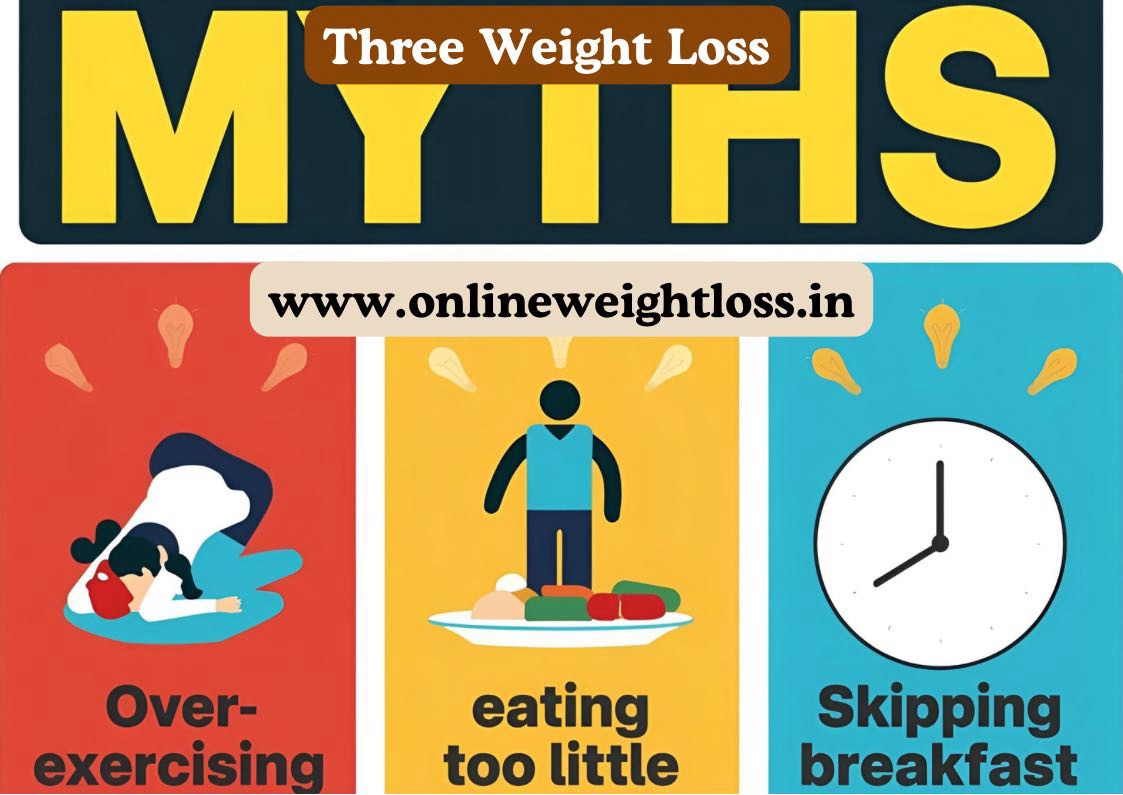
When it comes to weight loss, misinformation is everywhere. Many people unknowingly follow advice that does more harm than good. There are 3 weight loss myths that are especially common and can actually stop your progress instead of helping it.
Understanding and correcting these myths is essential if you want to lose weight safely, effectively and sustainably. Let’s uncover the truth behind these 3 weight loss myths and learn how to avoid them.
Myth 1: More Exercise Means More Weight Loss
The first myth among these 3 weight loss myths is the belief that the more you exercise, the more weight you’ll lose.
If this were true, then people who already have ideal or below-average weight and still exercise regularly should have vanished by now! Clearly, that’s not how the body works.
Exercise is important, but it’s just one part of the puzzle. Weight loss happens when your calorie intake is slightly lower than your calorie expenditure, not when you simply exercise more.
Excessive workouts can lead to fatigue, hormonal imbalance and even muscle loss — all of which slow down your metabolism.
So, while exercise helps, overdoing it won’t double your results. Balance is the real secret.
Myth 2: Eating Less Leads to Faster Fat Loss
The second myth in our list of 3 weight loss myths is the idea that eating very little will make you lose weight faster. While it might sound logical, this is far from the truth.
Your body needs a minimum number of calories (around 1,200 per day) to function properly. When you eat less than this, your body senses danger and enters stress mode. In this state, your metabolism slows down drastically to conserve energy.
What happens next is counterproductive — instead of burning fat, your body starts storing it for survival. This leads to fatigue, mood swings and even weight gain in the long run.
So, instead of starving yourself, focus on eating smart — include whole foods, proteins, healthy fats and fiber to keep your metabolism active and strong.
Myth 3: Skipping Breakfast Helps You Lose Weight
The final myth among these 3 weight loss myths is the belief that skipping breakfast will help you lose weight.
In reality, the opposite is true. A healthy breakfast sets the tone for your entire day — it stabilizes your blood sugar, boosts concentration and curbs unhealthy cravings later in the day.
When you skip breakfast, you’re more likely to overeat at lunch or crave junk food in the evening. This disrupts your metabolism and slows down fat burning.
Remember, breakfast isn’t just a meal — it’s a message to your body that the day has begun and energy will be provided. Choose smart options like oatmeal, eggs, fruit or yogurt to stay energized and on track.
How to Break Free From These 3 Weight Loss Myths
Now that you know the truth about these 3 weight loss myths, the key to progress lies in awareness and balance.
- Exercise regularly, but not excessively.
- Eat enough to support your metabolism.
- Never skip breakfast — nourish your body right from the start.
True weight loss is about consistency, not extremes. When you combine balanced nutrition with moderate activity, your results are sustainable and long-lasting.
Conclusion: The Power of the Right Knowledge
Breaking these 3 weight loss myths will change how you approach your health. Remember, weight loss isn’t a punishment — it’s a process of understanding your body and making smarter choices.
“When it comes to weight loss, misinformation is everywhere. The right knowledge sets you free.”
So, stop believing the myths and start following facts. Your body will thank you for it.
Related Resources
For a deeper dive into one of the myths (skipping breakfast), check out our article Why Skipping Breakfast Can Be Harmful?
For Detailed Weight Loss Guidance, Read Our Complete Guide to Healthy Weight Loss.
Explore this detailed article from Harvard Health Publishing — Colloquy Podcast: Why Exercising More May Not Help You Lose Weight — to understand deeply about Myth 1.