Table of Contents
What Do We Really Mean by “Real Food”?
You often hear people confidently say, “There is no replacement for actual meals.”
That’s why so many ask: Can meal replacements replace real food completely?
The problem starts with a misunderstanding of what an “actual meal” really is. Many YouTubers and even some doctors strongly claim that only traditional food counts as “real food,” but they rarely explain what actually makes something a meal for the body.
When we think of meals, we picture rice, lentils, roti, vegetables, etc. But our body doesn’t ask for “rice” or “roti” by name. These are just forms or sources of something deeper.
Your Body Needs Nutrients, Not Just Dishes
To understand whether can meal replacements replace real food completely, we must first accept one simple truth:
Your body demands nutrients, not names of dishes.
What your body truly needs are:
- Proteins
- Carbohydrates
- Vitamins
- Minerals
- And other essential nutrients
Rice, roti, dal, sabzi — all these are only mediums to deliver these nutrients. We eat food not for its name, but for the nutrition inside it.
So, if something else can provide these same nutrients:
- In the right quantity
- In the right proportion
- Without causing harm
…then that “something else” can also be considered your food. This is exactly where meal replacements come in.
Can Meal Replacements Replace Real Food Completely?
Now the central question: Can meal replacements replace real food completely?
From the perspective of your body, if a meal replacement product provides:
- Adequate proteins
- Balanced carbohydrates
- Essential vitamins and minerals
- Other required nutrients
…in the correct, balanced ratio, then it is fulfilling the same purpose as your regular meal.
In simple words:
👉 The term “meal” is not about rice, roti or vegetables themselves.
👉 A meal is defined by the nutrients it provides.
So, can meal replacements replace real food completely?
Yes — if they deliver all required nutrients safely and appropriately, they can act as a complete and valid replacement for a traditional meal, especially when your regular food habits fail to meet nutritional requirements.
“Meal replacement is not about skipping food; it’s about choosing smarter nutrition sources.”
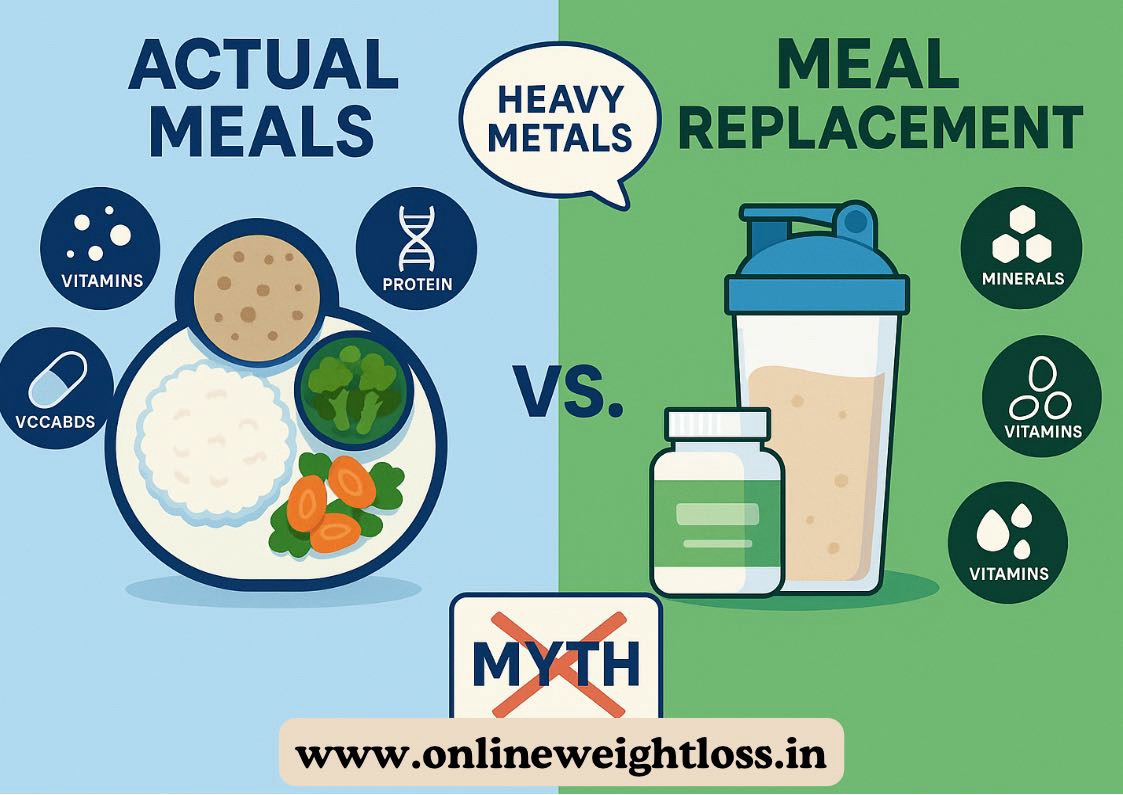
The Heavy Metals Rumors Around Meal Replacements
Another common myth that stops people from accepting meal replacements is the fear that they contain heavy metals that damage the liver or kidneys.
You might hear statements like:
“Meal replacements will harm your organs because they are full of heavy metals.”
But this is mostly a rumour, not a reality. The people spreading such beliefs usually do not have a single real example of someone whose liver or kidneys were actually damaged just because they used a proper, regulated meal replacement product. There is no valid medical evidence that a genuine, approved meal replacement, used correctly, automatically harms the body.
This is why, when we ask can meal replacements replace real food completely, we must separate facts from fear. Random rumours should not be stronger than actual experience, quality checks, and regulatory approval.
Choosing the Right, Safe Meal Replacement
Now, does that mean every product in the market is perfect? Of course not. That’s why your original content rightly emphasises:
- The product should be made by a reputable company.
- It should be approved by proper regulatory authorities.
If these conditions are met, the product is formulated to be safe for consumption. Instead of harming the body, such meal replacements can actually help it perform better by offering a well-balanced diet — something most people struggle to maintain consistently with their everyday meals.
So, when thinking can meal replacements replace real food completely, the more accurate statement is:
Meal replacements, when chosen wisely and from trusted, regulated brands, are not dangerous — they are a scientifically balanced way to give your body exactly what it needs.
“Quality matters more than rumors—trust verified nutrition, not hearsay.”
Conclusion: Smarter Nutrition, Not Fear
So, can meal replacements replace real food completely?
If a meal replacement:
- Provides all the essential nutrients your body needs,
- Comes from a reputable, regulated company, and
- Is consumed as per proper guidance,
then yes — it can completely replace a traditional meal from a nutritional point of view.
The word “meal” is not limited to rice, roti, or sabzi. A meal is any safe and balanced source of nutrients. Meal replacements are simply a modern, precise way to meet those needs — especially when your regular diet falls short.
Instead of fearing meal replacements because of rumours about heavy metals, it is wiser to focus on:
- The quality of the product
- The reputation of the brand
- The regulatory approval it holds
That’s how you move from confusion and fear to clarity and confidence.
Related Resources
- To understand more about safe external nutrition, read our blog “Is It Safe to Take Nutritional Supplement?”.
- For Detailed Weight Loss Guidance, Read Our Complete Guide to Healthy Weight Loss.
- For a general overview of nutrition drinks and how they’re used, you may refer to Harvard Health Publishing’s article “Supplemental Nutrition Drinks: Help or Hype?” – which discusses when such products can support daily nutrition.