Table of Contents
Introduction
Many people try dieting, exercising or following weight loss tips, yet the results are slow or temporary. This often happens because they don’t fully understand how weight loss actually works. Weight loss is not just about eating less or exercising more. It involves a combination of calories, hormones and metabolism, all working together inside your body.
When you understand how your body burns fat and stores energy, you can make smarter choices that lead to sustainable and healthy weight loss. In this guide, we will explain how weight loss actually works in simple terms so you can follow a practical approach instead of relying on myths or quick fixes.
The Basic Principle: Calories In vs Calories Out
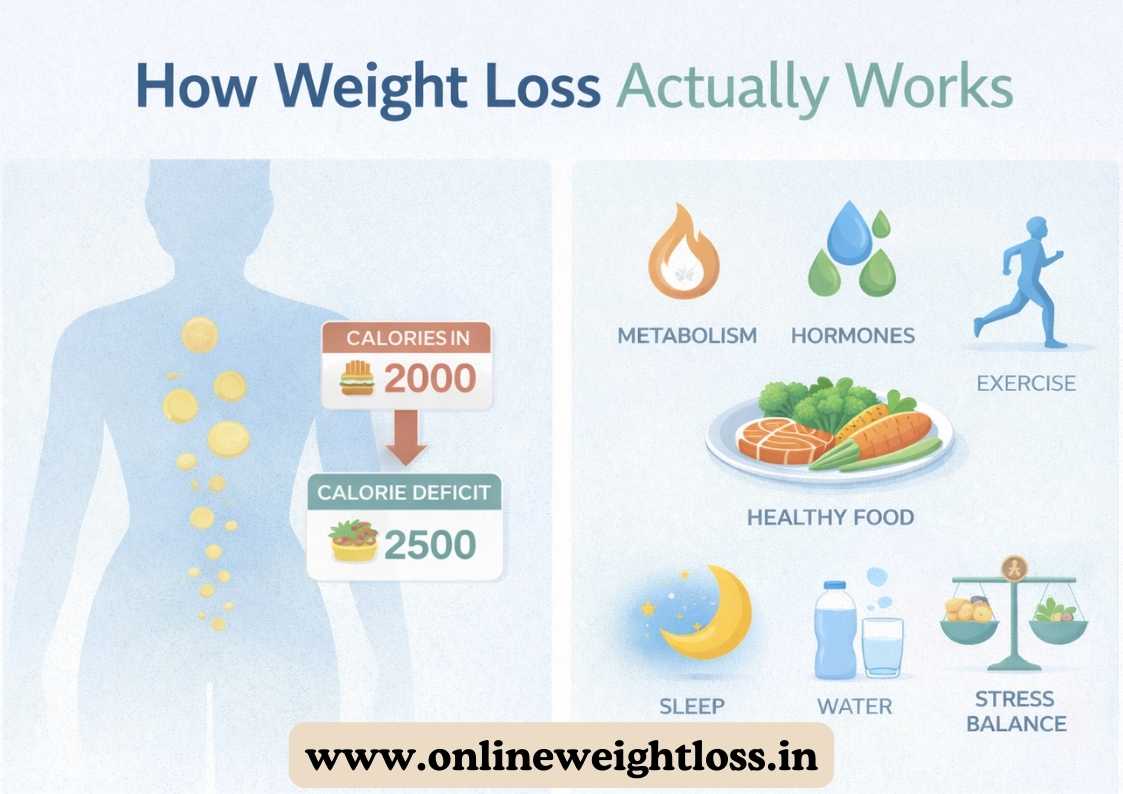
At the most basic level, weight loss happens when your body uses more energy than it gets from food. This is called a calorie deficit.
Your body needs calories for:
- Breathing and basic body functions
- Digestion
- Physical activity
- Brain function
If you eat more calories than your body needs, the extra energy is stored as fat. If you eat fewer calories than your body starts using stored fat for energy. This is the foundation to understand how weight loss actually works.
However, calories are only one part of the story. Two people eating the same number of calories may lose weight differently. That’s where metabolism and hormones come into play.
Understanding Metabolism: Your Body’s Energy System
Metabolism is the process by which your body converts food into energy. It includes:
- Basal Metabolic Rate (BMR) – Calories burned at rest
- Physical Activity – Exercise and daily movement
- Thermic Effect of Food – Energy used for digestion
- Non-Exercise Activity Thermogenesis – Energy expended for basic works
Some people naturally have a faster metabolism, while others burn calories more slowly. Factors that affect metabolism include:
- Age
- Muscle mass
- Genetics
- Activity level
- Diet quality
One important truth you need to know is that crash dieting can slow your metabolism. When you eat too little, your body goes into survival mode and burns fewer calories, making weight loss harder.
The Role of Hormones in Weight Loss
Hormones play a major role in fat storage and fat burning. Even if your calories are controlled, hormonal imbalance can affect results.
1. Insulin
Insulin controls blood sugar and fat storage. High insulin levels (from frequent sugary or refined foods) signal the body to store fat.
What helps:
- Reduce sugar and refined carbs
- Eat whole foods
- Include protein and fiber
2. Leptin and Ghrelin (Hunger Hormones)
- Leptin tells your brain you are full
- Ghrelin increases hunger
Lack of sleep, stress and extreme dieting disturb these hormones, making you feel hungry all the time. Understanding this is essential for knowing how weight loss actually works beyond just calorie counting.
3. Cortisol (Stress Hormone)
High stress increases cortisol, which:
- Promotes belly fat storage
- Increases cravings
- Slows fat loss
Managing stress through sleep, relaxation, yoga, meditation and physical activity helps balance hormones.
Why Diet Quality Matters
Not all calories affect your body the same way. For example:
- 500 calories of junk food increase hunger and fat storage
- 500 calories of protein, vegetables and whole foods keep you full and support fat burning
For effective weight loss:
- Increase protein intake
- Eat high-fiber foods
- Avoid processed and sugary foods
- Choose home-cooked meals
In the Indian context, replacing fried snacks with roasted options, limiting sugary chai and controlling portion size of rice and roti can make a big difference.
The Importance of Muscle in Fat Loss
Muscle burns more calories than fat, even at rest. When you lose weight without enough protein, you may lose muscle instead of fat. This slows metabolism.
To support your weight loss:
- Include basic exercises as per your body’s capability 2–3 times per week
- Eat adequate protein (dal, paneer, eggs, sprouts, curd)
- Stay physically active throughout the day
The 7 Lifestyle Pillars That Control How Weight Loss Actually Works
Weight loss is not controlled by diet alone. Your daily habits directly affect your metabolism, hormones and fat-burning ability. To truly understand how weight loss actually works, you must focus on these 7 lifestyle pillars that support your body naturally.
1. Water (Hydration)
Water plays a key role in metabolism and fat breakdown. Even mild dehydration can slow your metabolic rate and increase fatigue.
Why it matters:
- Helps the body burn stored fat
- Improves digestion
- Reduces unnecessary hunger (often thirst is mistaken for hunger)
Practical tip:
Drink 1 liter of water per 20Kg of body weight daily. Start your morning with a glass of warm water and drink water before meals to control portion size. For more details, you can visit our blog “How Dehydration Leads to Weight Gain“.
2. Physical Activity
Exercise is important, but daily movement matters even more. Your body burns calories through both workouts and routine activities.
What helps:
- Walking 7,000–10,000 steps daily
- Using stairs instead of lifts
- Stretching or light movement during long sitting hours
Physical activity increases calorie burn and improves insulin sensitivity, which is essential for understanding how weight loss actually works.
3. Sleep
Sleep is one of the most overlooked factors in weight loss. Poor sleep disrupts hunger hormones.
Effects of lack of sleep:
- Increases ghrelin (hunger hormone)
- Decreases leptin (fullness hormone)
- Slows metabolism
- Increases cravings for sugary foods
- Reduce your muscle recovery
Goal: 7–8 hours of quality sleep every night at the right time.
4. Stress Management
Chronic stress increases cortisol, which promotes fat storage, especially around the belly.
Signs stress is affecting weight:
- Emotional eating
- Sugar cravings
- Stubborn belly fat
What helps:
- Meditation or deep breathing
- Yoga or light exercise
- Spending time outdoors or with family
Managing stress supports hormonal balance, which is critical in weight loss.
5. Oxygen (Breathing and Fresh Air)
Most people don’t realize that proper breathing affects metabolism and energy levels.
Why oxygen matters:
- Fat burning requires oxygen at the cellular level (10 Kg of fat burning requires approximately 29 Kg of Oxygen)
- Deep breathing improves energy and reduces stress
- Outdoor walks improve oxygen intake and mental health
Practical tip:
Spend at least 15–20 minutes daily in fresh air and practice deep breathing exercises.
6. Diet Quality
Diet is not just about calories—it’s about nutrition quality.
Focus on:
- Protein-rich foods (dal, paneer, eggs, curd, sprouts)
- Fiber from vegetables and fruits
- Healthy fats (nuts, seeds)
- Home-cooked meals
Avoid frequent consumption of:
- Fried foods
- Sugary drinks
- Processed snacks
A balanced diet supports metabolism and hormone function, which explains the real process of weight loss beyond simple calorie counting.
7. Mindset and Consistency
Your mindset determines long-term success. Many people quit too early because they expect quick results.
Healthy mindset principles:
- Focus on habits, not quick weight loss
- Track weekly progress, not daily fluctuations
- Accept slow and steady fat loss (0.5–1 kg per week)
Consistency is the most powerful factor in sustainable weight loss.
Understanding these 7 pillars will help you understand how weight loss actually works.
Why These 7 Pillars Matter
When these seven pillars work together:
- Metabolism improves
- Hormones stay balanced
- Fat burning becomes natural
- Weight loss becomes sustainable
This holistic approach gives you the real answer to your every query about weight loss in everyday life.
Common Myths About Weight Loss
Myth 1: Eating less always leads to faster weight loss
Reality: Extreme dieting slows metabolism.
Myth 2: Exercise alone is enough
Reality: Diet and hormones also matter.
Myth 3: Carbs must be completely avoided
Reality: Portion control and quality are more important.
Understanding these myths helps clarify how weight loss actually works in real life.
A Practical Plan for Sustainable Weight Loss
- Eat balanced meals with protein, fiber and healthy fats
- Maintain a moderate calorie deficit
- Avoid crash diets
- Exercise regularly (Light exercise as per your body capacity)
- Sleep well and manage stress
- Track progress weekly, not daily
This balanced approach supports metabolism and hormone health.
FAQs: How Weight Loss Actually Works
1. How long does it take to see weight loss results?
Most people start noticing changes within 3–4 weeks if they stay consistent.
2. Can hormones stop weight loss completely?
Hormones don’t stop weight loss but can slow it. Proper diet, sleep and stress management help balance them.
3. Is calorie counting necessary?
Not always. Portion control and eating whole foods often work without strict counting.
4. Why does weight loss slow down after some time?
As you lose weight, your body needs fewer calories and the net calorie deficit gets reduced. Adjust diet and activity levels gradually.
5. What is the most important factor in fat loss?
Consistency with a balanced diet, activity and healthy lifestyle.
Conclusion
If you truly want lasting results, you need to understand how weight loss actually works. It is not about starving yourself or following extreme diets. Sustainable weight loss happens when you create a balance between calories, support your metabolism and maintain healthy hormone levels.
Focus on small, consistent changes in your diet, activity, sleep and stress management. When your body functions properly, fat loss becomes a natural and sustainable process.
Related Resources
Internal Resources
- Complete Guide to Healthy Weight Loss – A step-by-step plan to lose weight safely and sustainably through diet, lifestyle and habit changes.
- Why Weight Loss Often Feels Like a Struggle – Understanding the real reasons behind weight loss challenges and the right direction to overcome them.
External Resources (Trusted Sources)
- World Health Organization (WHO) – Healthy Diet Guidelines
https://www.who.int/news-room/fact-sheets/detail/healthy-diet - Centers for Disease Control and Prevention (CDC) – Healthy Weight
https://www.cdc.gov/healthyweight/index.html
These sources provide scientifically validated information about healthy weight management, nutrition and long-term lifestyle changes.
About the Author
Arun Dewangan is a Health and Wellness Blogger focused on natural weight loss, balanced nutrition and lifestyle-based solutions to help people achieve long-term health without extreme dieting.